Showing posts with label Shenandoah Valley. Show all posts

Saturday, August 15, 2015

Virginia Wine Weekend Getaway Towns: Part 5

Continuing with our six-part examination of getaway spots in the Commonwealth where you can partake in Virginia's finest, and explore an interesting town while doing it, we arrive upon probably our favorite town in the entire state: Staunton. We have featured Staunton in several Notebook entries in the past, but we're continually impressed/amazed with what this charming, artistic, and not-too-sleepy town has to offer. We prefer it over nearby Charlottesville, which sadly now resembles Northern Virginia with its traffic, road construction, restaurant and hotel prices (especially during fall weekends when the Cavaliers play in town; forget about finding a hotel or even Rodeway Inn-style motel room on those weekends).

An easy, scenic 30 minute drive west on I-64 (and calling an Interstate highway "scenic" is not a misprint) will bypass Waynesboro (a town whose potential has not been realized) and take you into Staunton. You can't see Staunton from the Interstate (except for the creepy shuttered hospital in the hills off the highway, a perfect horror movie setting if there ever was one), which makes the drive into town a true surprise for those who've never been there. The town (population approaching 24,000) looks bigger than it is, with its mid rise century-old buildings and warehouses. The town is surrounded by foothills and mountains are not far in the distance.

Vista of Staunton, from the Sears Hill bridge, which crosses the tracks near the Staunton train station:

As you walk through the charming, easily walkable downtown, you'll hear the churches and clock tower peal every hour. The town has a distinct European vibe, and the presence of the American Shakespeare Center, complete with a near-exact replica of Blackfriars Theatre, adds to the artistic feeling here. You can frequently see actors in costume walking down the street, or enjoying a beer in the beer garden adjacent to the theater before or after a matinee.

Staunton's most famous hotel is the Stonewall Jackson, built in 1924 in the center of town; the hotel was lovingly renovated after years of neglect in the early '00s, and now hosts countless weddings and business meetings every year. The blogmasters, both on tight budgets, prefer to stay at the Howard Johnson's downtown, which was a Holiday Inn in a previous life and is half the cost of a room at the Stonewall Jackson. If you view hotels/motels as a place to simply hang your hat, we suggest the Howard Johnson: Exterior corridors (easy access), four floors, extremely friendly staff (who operate their own urban garden on the premises, keeping with the progressive vibe in the town), a lap pool, quiet and clean rooms, free continental breakfast, and (here's the best part)....walking distance to downtown.

The selection of restaurants downtown rivals nearby, more famous, Charlottesville: Byers Street Bistro, Mill Street Grill, The Clocktower (located in one of the most historic buildings in town, a perfect meet-up spot if you're meeting others in town), Zynodoa, Shenandoah Pizza, AVA. You can't miss with any of these locations; each one has its own character and big city-style menus and wine lists.

And of course, the wineries are close by. In fact, one winery has a tasting room in the heart of the hip wharf area of Staunton: Ox Eye. The owners explained that they wanted to try something different; grow their grapes in the high elevation vineyards outside of town, but open their tasting room in a more urban setting. The result of vineyards in higher elevations are varietals more common to upstate New York than Virginia: Rieslings (usually they offer two Rieslings--Scale House Reserve, with peach notes, and the regular, with more citrus and honey notes); Pinot Noir (one of the few Virginia wineries to offer one); and Lemberger, a peppery red which also goes by the name Blaufränkisch. Not one bum wine here, but our favorite has to be the Riesling (both are excellent but we preferred the Scale House Reserve). The tasting room is located in a restored train coal weigh station; the train passes by directly up the steep incline next to the patio behind the tasting room. The European flavor exists here in spades.

Wine patio behind Ox Eye tasting room:

About that train: The station is a stopping point for Amtrak. The station is unmanned but the Cardinal pulls through town regularly, and brings in passengers from New York City and Chicago. The Shakespeare Theater is world-renowned, and we've met people from Iowa and California, as well as New Zealand and Italy, on the Ox Eye patio.

Hop in the car and visit three other wineries, north, east, and south of town, respectively.

Bluestone (north of town, near the historic college town of Bridgewater):

Bluestone is surrounded by hills and cornfields; the vines are planted on an incline to take advantage of natural drainage. Our favorites here are the half oak/half steel fermented Viognier, with its notes of fig, and their Steep Face, a fruit-forward Chambourcin with notes of licorice and hazelnut.

Barren Ridge Vineyards, east of town (near the town of Fishersville), sits atop a bluff with grand mountain views and a chalet-like tasting room:

The tasting here is extremely informative and the winery offers a nice mix of dry and off-dry options. The stand-outs are the Vidal Blanc, a crisp summer wine with distinct citrus notes, but not overly sweet; and their 2013 Cab Franc, mild (good for summer drinking), with a hint of oak.

South of town, about 30 minutes away, is Rockbridge Vineyard. This is one of the original Virginia wineries, and their barn-housed tasting room is adorned with bottles draped in medals. The wines here are incredibly well-priced (think $12 for a bottle of bold red), the vistas are peaceful, and the feeling here is pure Virginia.

Every wine's a winner at Rockbridge, but the two wines we keep returning to are their off-dry Pinot Noir Blanc, crisp and perfect with cheese omelettes, and their Tuscarora Red blend (Chambourcin, Cabernet Franc, Pinot Noir, DeChaunac and Merlot), great with pasta or pizza.

If you're anything like the Notebook blogmasters, you may be ready for a switch to beer after checking out some (or all) of these wineries. Return thyselves to downtown Staunton, and visit two of the breweries/brew pubs downtown (near the wharf district), each with its own character and stellar crafts:

RedBeard Brewing

Shenandoah Valley Brewing

One thing about Staunton; you'll only get bored if you want to. And most likely, you will be disappointed to come home.

Saturday, June 21, 2014

A Creek Runs Through It (Part I)

One common trait to several wineries in the Commonwealth is a creek, stream, brook, river (whatever term you wish to apply) running through the property. Visiting wineries in the country is always a treat; crossing a narrow one lane bridge that spans a creek is one of the driving pleasures. We can think of at least 15 wineries in Virginia where guests have to cross a creek, and after enjoying an intimate tasting with the owners, visitors can enjoy a bottle (or 2, or 3) on the banks of the same creek.

A few wineries in the state already spotlighted by the Notebook with creeks/streams/rivers running through them: Sharp Rock Vineyards (Sperryville), DuCard Vineyards (near Madison), Rogers Ford Winery (near Culpeper), Unicorn Winery (west of Warrenton), and Wintergreen Winery (south of Waynesboro).

To this list, we can add two relatively new locations in Virginia, the subject of this and a forthcoming Notebook blog. The first, Cedar Creek Winery, has been making wine for about five years and selling its product to retail outlets throughout the state for nearly as long. We've been intrigued with visiting Cedar Creek Winery for years, and prior to 2014, the winery was open by appointment only. We just never made it out there. Until recently. And yes, the trip was well worth the wait.

Owner/winemaker Ron Schmidt is a New Jersey native who moved to the northern Shenandoah Valley, southwest of Winchester, after falling in love with the land, views, and people. A visit to his winery is unlike any other experience you're likely to have in the state. Don't expect live bands, festivals, bachelorette parties, kids and dogs running around, and a spot that resembles an outdoor Wolf Trap concert; Cedar Creek is all about the wines. Specifically, two wines: Cab Franc and Chardonnay. He's perfected these two varietals and is adamant about not breaking off into growing other grapes. The land is perfect for Cab Franc and Chardonnay. If you're a fan of off-dry or off-sweet (or pure sweet) wines, you won't find much in the way of wine here to enjoy. So embrace your role as designated driver, and let your dry varietal fans go crazy.

Vertical tastings rule this tasting room. You will be treated to vintages from different years of both varietals. It is an educational tasting experience. All the while being entertained by Schmidt, who speaks passionately about his retirement "hobby" turned lucrative business. He explains that he does not allow any sub par fruit to enter his crush pad room. In fact, in 2011, a very wet and poor growing year for Virginia wines, a little less than half of his Cab Franc crop was dropped on the vineyard grass for the deer and birds to eat. Rot had invaded many of the grape clusters. What was left was crafted into a relatively lighter style of Cab Franc that was so noble, it won a Governor's Cup Bronze Medal in 2013. During our tasting, we enjoyed the 2011 and 2012 Chardonnays (the former with citrus fruit notes and on the crisp side; the latter with a more tropical and cream finish), and the 2008 through 2011 Cab Francs. Ron explained that 2013 was another poor year and visitors should not expect a 2013 Cab Franc. He will get by on his library of earlier vintages; he refuses to buy and offer wines from other nearby wineries.
Although he is not adverse to directing folks to other nearby locations. North Mountain Vineyards, another longtime favorite of the Notebook, is 15 minutes up the road, across the actual North Mountain, which boasts an incredible view of the Shenandoah Valley (although the road is narrow up the mountain and finding a spot for photo taking may be a challenge).

New vineyards at Cedar Creek Winery, June 2014:

A visit to Cedar Creek Winery includes a tour of the vineyards, and a fast-paced (again, that Jersey influence) but extremely informative visit to the barrel room. Then up to the tasting room, decorated with fascinating curios Ron has acquired over the years from antique shopping. His prices are extremely good: Not one bottle over $20. He commented that other wineries in the state price their bottles higher than they should be, because of their business model. This is absolutely true: Wineries set up as "jack of all trades" entertainment centers have higher overhead, hence their prices. There is no shortage of such locations in Virginia. Cedar Creek Winery is all about the wine, the best vintages he can create.

Fresh vineyard, up close, at Cedar Creek:


Cedar Creek itself was the location of one of the bloodiest skirmishes during the Civil War. Located only 8 minutes from the West Virginia border, you are in the heart of the mountains here. And the aura of Civil War spirits fill the air. Going along with his "not an entertainment venue" policy, Cedar Creek Winery offers no food sales. He welcomes outside food, but during our visit he and his wife were generous with bags of Lance brand cheese crackers, which worked just fine with the bottle of Chard we consumed.

The line up at Cedar Creek Winery:

Experience some of the best creations the Shenandoah Valley AVA has to offer. And if you crave entertainment and can tear yourself away from this little piece of "almost Heaven," North Mountain Vineyards is a perfect second stop.

For URL click here: Cedar Creek Winery

Saturday, February 15, 2014

Winery Weekends: Alternatives to Charlottesville

Charlottesville and the Monticello AVA are well-known as being the heart of Virginia vinoland, but word has gotten out. Ten years ago, you could book a room at the Omni or DoubleTree in Charlottesville for the two weekend nights for under $100 a night. Nowadays, you're lucky if you can get a room at the EconoLodge there for less than $120 a night (unless you prefer to visit C'Ville in the middle of January). And it's not just the fall, with its brilliant colors and Cavalier football fans, that causes the price spike. It's the Monticello AVA, four quadrants (recently discussed in the Notebook) of wineries that fit every taste, literally and figuratively.

As any resident of the high blood pressure region of Northern Virginia will tell you, getting out of the confines of the Beltway, Tysons Corner, and the Fairfax/Vienna/Oakton metroplex is essential for survival. Some folks own a cabin in the mountains or a beach getaway, while others rely on the hospitality of other towns, in picturesque settings like the Shenandoah Valley or the Northern Neck. Charlottesville is a great spot, as it's just far enough away from the hustlebustle of Northern Virginia and offers big city amenities (as many college towns do) like great restaurants, independent stores and of course, vineyards.

As much as we'll endorse Charlottesville until we're six feet underground, the costs (and several clogged roads around the city) are beginning to resemble the NOVA scene.....not exactly a great escape. But there are some viable alternatives to the Cavalier city: Waynesboro and Staunton.

Waynesboro is a city about 20 miles west of Charlottesville, a crossroads where the Blue Ridge Parkway begins (or ends) and Skyline Drive ends (or begins). The wineries in the Southwest Quadrant of the Monticello AVA are actually closer to Waynesboro than Charlottesville. This city has a more blue collar and downtrodden feeling compared to Charlottesville or even Staunton, but the economy is picking up. The Chamber of Commerce is taking advantage of the proximity to Skyline Drive, the Blue Ridge Parkway, and the numerous wineries that surround the city, and the downtown area is looking a bit more prosperous (although they still have a few years to go). Interesting restaurants, wine shops and coffee kiosks are popping up over town, which does get its share of gridlocked traffic (mainly due to the exits off I-64). Several affordable motels, including a new Best Western Plus, dot the city. We usually get a few rooms at the Quality Inn near the center of town. It's old-fashioned (exterior entrances), affordable and clean, and boasts large rooms if small bathrooms. You can throw a stone and hit the downtown section of town.

Unique restaurants and shops are beginning to crop up. A few worthy of checking out:

The Green Leaf Grill
The Boardwalk Cafe
The Purple Foot

Staunton is a town the Notebook adores. We've spotlighted it before. Here we offer some great, eclectic restaurant choices and a few photographs:

Zynodoa
Byers Street Bistro
Barking Dog
Clocktower

Staunton is a photographer's dream:


Tuesday, July 23, 2013

VIDEOCLIP: Bluestone Vineyards

Deep in the Shenandoah Valley, near Harrisonburg, Bluestone Vineyards.
Enjoying vino on a hot summer day in 2011.

Wednesday, July 17, 2013

Down in the Valley: Part III

The Shenandoah Valley AVA is a nearly 100-mile long stretch that begins north of Winchester and ends south of Lexington. Earlier this summer, we spotlighted the northern tip (Winchester) and southern tip (Lexington) of this region of farms, Americana towns, villages, and soil nicely drained by rivers and creeks running through the AVA, including the world famous Shenandoah River. The final stop is near the geographic center of the AVA - the Staunton/Harrisonburg area. Four very different wineries are within a few minutes drive from both of the Valley cities (Staunton/Harrisonburg and Waynesboro actually make up a "microplex," and share an airport--Shenandoah Valley Regional--which has commercial flights offered by United and Frontier Airlines).

Both Harrisonburg, home of James Madison University, and Staunton, home of several liberal arts schools, offer unique downtowns with numerous specialty shops and restaurants. And both cities have abundant hotels, motels and B&Bs, so dropping anchor after a day of tasting should pose no problem. Best of all, the towns are easy to get around - you don't have to drive far to get to VAVINOLAND.

Beginning in Staunton, you don't have far to go to visit the first winery: Ox-Eye Winery is the only Virginia tasting room located in a downtown section of a city in the Commonwealth. A few yards away from the hip wharf area of Staunton (home of the weekend farmer's market, several restaurants, and a great wine store), the Kiers family decided to place their tasting room in an urban environment, instead of having "just another winery next to a vineyard" (their vineyards are about eight miles from town). The tasting room and backyard patio are so irresistible, you may not want to leave. They open at 10 AM during the weekend, so you can get an early start. Wines you're more likely to find in upstate New York are the star whites here: Gewürztraminer, Traminette, and Riesling (the higher altitude in this part of Virginia allows these varietals to thrive here). Their steel aged Chardonnay is delicious, and they're the first Virginia we've visited that offers Lemberger, a spicy red that would pair well with a juicy steak, in any season.

The tasting room at Ox-Eye:

The aforementioned patio in the back is a perfect way to start (or end) your day. The patio is literally at the base of a mountain, and when the clock tower peals every hour, the sound echoes throughout the picturesque town. Shut your eyes and you could be in France or Germany.

As difficult as it might be, wrap it up at Ox-Eye after a few glasses (or a bottle), and jump back in the car to head north, towards Bridgewater and Harrisonburg. Your second stop is Bluestone Vineyard, which opened its doors about two and a half years ago and is already a regional, and state-wide, favorite. Surrounded by cornfields as well as vineyards, Bluestone already has an admirable number of vintages for its young age. Traminette and pinot noir are offered here as well; the blogmasters are still amazed at how well some spots in the Commonwealth excel at wines more commonly found in other states. Probably their most popular wine is a table white named Beau, after their golden retriever. This wine, the dog, and the proximity of James Madison University (for 21+ old females) probably explains why this wine is so popular. A bit too sweet for us, but would work very well on a 100 degree day with spicy food. Our favorite wine here was their Quartz Hill Red, a delicious blend of Cabernet Franc and Chambourcin, with powerful notes of currant and pomegranate.

Bluestone Vineyard:

Bluestone Vineyard lies on the western side of the I-88 corridor near Harrisonburg. A quick jaunt to the eastern side of the Interstate (after stopping in downtown Harrisonburg for lunch), near the airport, lies CrossKeys Vineyards. An impressive Mediterranean-style building and courtyard with tables and umbrellas greets visitors. The tasting room, like Bluestone, is usually hopping - once again, proximity to a large state university town doesn't hurt. Yet another pinot noir (who needs Oregon and California?!) is the standout wine here. One thing pinot noir fans will notice (for better or worse, depending on your taste buds) is that Virginia pinots have little in common with west coast pinots, in both character and alcohol content. These pinots are more mineraly, not too far removed from the cab francs that are found in nearly every tasting room in the state. But like Virginia wine in general, they do grow on you. CrossKeys is more of a red wine spot (while Bluestone is more of a white wine destination); however they do have a fine oaked (not too oaked) chardonnay here, with soft notes of vanilla. A table white called "Joy" was created for the fans of sweeter wines (there is a red table called "Joy" as well, a Chambourcin with a mild sweetness).

CrossKeys Vineyards:

CrossKeys was built with parties and weddings in mind, as well as winemaking, and if there happens to be a large event occurring while you visit, you won't have far to drive to escape that. The final stop is northeast of Harrisonburg, near the town of Stanley (on business route 340 towards Luray). Wisteria Vineyard is about as pure Virginia as you can get, complete with wandering farm animals, a mountain creek on the property, and a sipping porch. The first thing we noticed was the "back to nature" vibe of the location; if a winery existed near Woodstock, New York, it would probably resemble Wisteria. The wine is special, too. One red that was new to us is "Carmine," which is popular in California and resembles a lighter Merlot. They're the only winery in Virginia that offers this varietal. They have a Merlot as well, and their star white is their Traminette. This spot is a little further away from Harrisonburg/Staunton, and could be recommended for your drive back to the DC area. But it is certainly worth a visit--and it's one of the few wineries in the state that would appeal to children (courtesy of the free grazing farm animals).

Wisteria Vineyard:

The Shenandoah Valley of Virginia is a unique AVA that offers varietals you simply don't find in other parts of the state. With three sections of the valley bursting with flavor, the hardest decision is which part of the valley to pick (north, south, or central valley).

URLS:
Ox-Eye Winery
Bluestone Vineyard
CrossKeys Vineyards
Wisteria Vineyard

Monday, June 17, 2013

Down in the Valley: Part II

The Shenandoah Valley of Virginia is one of the Commonwealth’s AVAs (American Viticultural Areas), and it’s easy to taste why. The soil drainage from the creeks and rivers leading through the Blue Ridge Mountains (to the east) and the Alleghenies (to the west), suits wineries deep in the valley well, while others in the foothills leading up to the mountain chains benefit from higher elevations that allow for varietals not typically found in Virginia, like Pinot Noir and Riesling. Winchester-area wineries were featured in a previous blog. On the southern end of the valley lies Lexington.

Lexington (and its nearby sister town, Buena Vista), is home to several colleges and universities (including Washington & Lee and Virginia Military Institute), as well as one of the best wine stores in the state (Uncorked, in downtown Buena Vista). As the case with many small Virginia towns, Lexington is rich in history. Tour the Stonewall Jackson House in Lexington for a fascinating glimpse into the life of the Civil War figure.

Lexington is smaller than Staunton or Winchester, so you can walk from one end of the town to the other in an hour (maybe longer if you visit one of the many unique shops). The proximity of the Natural Bridge, as well as the junction of two major Interstates (81 and 64), make Lexington a very vibrant town, despite its small size.

And of course there are wineries – to the southwest, northwest, and right off the Interstate. Rockbridge Vineyard, named after the aforementioned Natural Bridge (which recently was posted “For Sale”), is located about 2 minutes from the I-81 off ramp north of Lexington, but seems like a million miles away. The tasting room is housed inside a large barn, which doubles as the winery’s events center. One of the oldest wineries in the state, Rockbridge has something for everyone – from bone dry (they are one of the few Virginia locations offering a Pinot Noir; the elevation here is suitable for Miles’ favorite wine); to semi-dry (the relatively unknown, at least for the Commonwealth, Vignoles, with its notes of kiwi and macadamia nuts); to sweet (and delicious when chilled)—Jeremiah’s Blush, perhaps their most popular wine (a blend of Concord—another grape not very common in Virginia, and Vidal Blanc).

Not far from Rockbridge (and reachable via local country roads, to minimize your time on the Interstate), Lexington Valley Vineyard specializes in Norton, one of the signature Virginia reds. It’s no surprise that the owners hail from Missouri, which surpasses Virginia in Norton winemaking. Even those who are lukewarm towards the eccentric Norton grape will find something to enjoy here. The varietals are more on the sweet side, which would be perfect for hot summer months: Traminette (semi-dry), Vidal Blanc, and a rare (for the state) Catawba, a musky version of Concord. Their rosé made from their Norton is incredible, slightly spicy to offset the semi-sweetness. This is a very intimate winery, and in fact is only open by appointment. But they are definitely worth a visit and the prices are incredibly good.

Southwest of Lexington, high in the Alleghenies, lies Blue Ridge Vineyard, another location with rustic appeal, rolling hills on all sides, and wines that are unique compared to the rest of the state. As the case with the other wineries featured, options are more on the sweet side of the scale. In fact we found the wines at these three locations had more in common with the Finger Lakes offerings than the Commonwealth. Blue Ridge offers Riesling, Traminette, Gewürztraminer, Pinot Noir and several sweet table wines. Despite our preference to dry wines, there’s something about the mountains and the valleys that cry out for off-dry and sweeter options. Blue Ridge, like Rockbridge, conducts its (very) informal tasting in an old barn, and there are acres upon acres of land to spread out. You are well rewarded with room to move about when you visit these harder-to-find VAVINO spots.

After your winery visits, Lexington offers a number of fine restaurants. And you can always catch a movie at the drive in theater on the highway leading to Natural Bridge.

Rockbridge Vineyard
Lexington Valley Vineyard
Blue Ridge Vineyard

Other wineries relatively close to Lexington:

Virginia Mountain Vineyards (near Fincastle, about 15 minutes from Blue Ridge Vineyard)
Barren Ridge Vineyards (between Staunton and Waynesboro)
Ox-Eye Vineyards (downtown Staunton)

Visit Rockbridge Vineyard now, via a videoclip:


Part III will take us to the middle of the valley: Harrisonburg/New Market

Saturday, May 18, 2013

Down in the Valley: Part I

The Shenandoah Valley of Virginia is one of the Commonwealth’s AVAs (American Viticultural Areas), and it’s easy to taste why. The soil drainage from the creeks and rivers leading through the Blue Ridge Mountains (to the east) and the Alleghenies (to the west) suits wineries deep in the valley well, while others in the foothills leading up to the mountain chains benefit from higher elevations that allow for varietals not typically found in Virginia, like Pinot Noir and Riesling.

An easy drive from several states in addition to Virginia (West Virginia, Maryland and Pennsylvania), the Shenandoah Valley is 100 plus miles of incredible views, charming small towns, and farmland. You don’t have to drive very far from the Interstate that bisects the valley (81) to find a quiet utopia here; in fact one of the seven covered bridges in the state is so close to 81 that you can hear trucks in the distance, just far enough not to disturb your quiet piece of heaven.

There are three towns you can designate as your home base, on the north end, south end, and in the middle: Winchester (north), Lexington (south) and Harrisonburg (middle). All three towns have numerous hotels, motels, and B&Bs, not to mention interesting and historical downtown sections.

Winchester is home to Patsy Cline and a famous apple industry. A pedestrian-only outdoor mall resembles the larger one in Charlottesville, and is dotted with restaurants and cafés offering local flavor.

Wineries near Winchester:
Valerie Hill, featured in a previous blog, features a tasting room in a home built in 1807. Open since 2012, Valerie Hill is typical for the Shenandoah wineries – rolling landscape and birds calling in all directions. Standout wines here are their Viognier, Chardonnay, and a Chambourcin/Cab Sauv blend.

North Mountain Vineyards is a blogger favorite, and has a storybook feel to it, right down to their tasting room building. A large deck and countless picnic tables dot the property, one of the original wineries in the region. Our favorite wines here are the Claret (a Meritage-like blend of Cabernet Franc, Cabernet Sauvignon, and Petit Verdot), Chambourcin, and Apple Wine (this is not far from Winchester, after all).

Shenandoah Vineyards is the oldest winery in the Shenandoah Valley, and is located near Shenandoah Caverns. Their tour is one of the most informative in the state. Best bet wines here are their Chardonnay, Reserve Chambourcin, and Rebel Red, an off-dry they tout as the “red wine for white wine drinkers.”

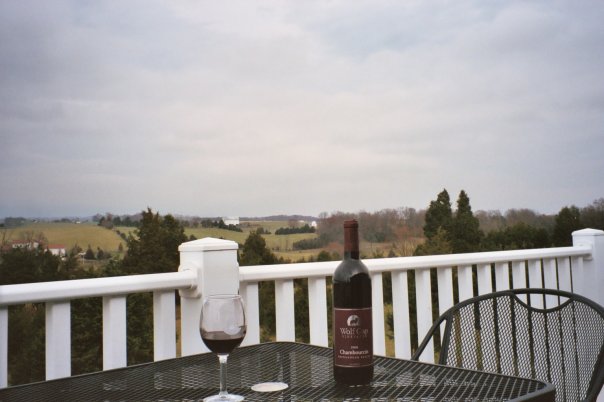
Wolf Gap Vineyard is named after the Wolf Gap that straddles the Virginia and West Virginia line in the Allegheny mountains. “Wolfgap Willie” is the name adopted by the owner/winemaker, Willard Elledge. Wolfgap Willie is a pure Virginia gentleman who may even take you down to the barrels for a private tasting, if he’s not too busy. Some of our favorites here are the mainstays: Cab Franc, Chambourcin, and Chardonnay. He offered a dry Riesling several years ago, and we hope he has another great vintage of that harder-to-find (in Virginia) wine.

Not far from Wolf Gap is the vineyard whose owner helped Willie get involved in the winemaking craft, Cave Ridge. The tasting building was designed with ski chalet in mind, using woodstain instead of paint. Viognier is the star here: At least three different versions are offered, from stainless steel aged to oak aged. All are delicious and offer distinctively different notes on the palate. The favorite reds is their blend: The bold Fossil Hill Reserve (Cabernet Franc, Chambourcin, and Petit Verdot), as well as their “Red Silk” Cab Franc, which is perfectly named.

Other wineries relatively close to Winchester:
Glen Manor Vineyards (near Front Royal, off Skyline Drive)
Veramar Vineyard (directly off route 7)

North Mountain Winery:


Wolf Gap Vineyards:


Covered bridge near Toms Creek, VA:


Part II will take us down to Lexington……

Friday, May 10, 2013

Thursday, November 29, 2012

Video Clip: Rockbridge Vineyard

Rockbridge Vineyard is located north of Lexington, VA, about two minutes from Interstate 81 (the vineyards are well marked on the Interstate). But it feels like a hundred miles away. You hear no traffic noise and no cars are in sight.

A quick drive through the village of Raphine takes you to Rockbridge, named after the county and the famous Natural Bridge about 30 miles south of here (the bridge adorns the bottle labels).

Rockbridge is one of the oldest wineries in the state - and they have plenty of good to excellent options for every taste, including a few unique options for the Commonwealth: Regular Pinot Noir, Vignoles, and an off-dry "Blanc" (white) Pinot Noir. Their "Jeremiah's Blush" is probably their most popular wine; 4% residual sugar, perfect for wine newbies as well as those looking for affordable wine to go with their spicy Thai meals or barbecue ribs. A bullfrog is featured on the label (babyboomers will get the reference).

The tasting room is located inside a barn, and there is a real "settled" feel to this location. Plenty of outdoor seating options, as well as a party room in the barn for indoor imbibing.

Watch our short video clip taken in October 2012 at Rockbridge Vineyard: